Centre will give customers early access to representative product, shortening the time from first production to full commercial volumes at Train 1
“Customers told us plainly what they need: our product in their hands, early,” said Vikki Jeckell, Chief Executive of Tees Valley Lithium.
Tees Valley Lithium (TVL) is to establish a Qualification and Validation Centre at the Billingham Chemical Complex, Teesside. The move responds to requirements from existing and prospective customers, including cathode manufacturers, cell manufacturers and OEMs.
Battery and cathode manufacturers validate a new supplier’s lithium hydroxide in their own production lines, a process that typically takes twelve months. For a new refinery, this usually begins once the plant is producing.
The centre will give customers early access to representative battery-grade lithium hydroxide, so validation can run in parallel with the construction of Train 1, the first 25,000 tonne per year production train of TVL’s refinery at Billingham. This is expected to shorten the time from first production to full commercial volumes.
The centre will be housed in an existing industrial building within the Billingham Chemical Complex. Its sampling line will replicate the Train 1 process configuration using Veolia’s process technology, so the product customers test is representative of the product the refinery will make. A customer and visitor area will allow customers and partners to review material and process performance at first hand.
The centre will also allow TVL to validate a wider range of feedstock, including lithium recovered by TVL’s battery recycling partners. Recycled feedstock supports customers’ obligations under the EU Battery Regulation, which requires minimum recycled lithium content in new batteries from 2031, with batch-level traceability provided through TVL’s partnership with Circulor.
Once complete, the centre will be able to process samples of lithium carbonate from Geothermal Engineering Limited’s demonstration plant in Cornwall, refining them to battery grade.
Vikki Jeckell added: “Qualification now runs alongside the development of the refinery rather than after it, which brings forward the point at which customers can move to commercial volumes. It also lets us test mined, brine and recycled feedstock side by side, and show that UK lithium, including domestic Cornish lithium from GEL, can be refined to battery grade on Teesside.”
Paul Atherley, Chairman of Alkemy Capital Investments, said: “The UK needs its own lithium-refining industry, and that industry will be built on the confidence of the customers it supplies. The Qualification and Validation Centre brings those customers to Billingham to work with TVL’s product firsthand. It is another practical step in building the world-class merchant lithium refinery the United Kingdom needs.”

Jaguar Land Rover (JLR), the UK’s largest car manufacturer, is undergoing a sweeping transformation to become a fully electric, modern luxury carmaker. Anchored in the West Midlands, JLR’s bold vision represents one of the most ambitious industrial reinventions in British automotive history.
Under its “Reimagine” strategy, JLR is investing £15 billion over five years to electrify its product line, modernise manufacturing, and lead the premium electric vehicle (EV) segment globally.
The West Midlands is central to JLR’s electric future. Key initiatives include:
Solihull Assembly Plant
Wolverhampton Engine Manufacturing Centre (EMC)
Together, these facilities position the West Midlands as a national anchor for EV innovation and high-value green manufacturing.
By 2025, Jaguar will become a pure-electric brand, debuting an all-new luxury GT as the first model in its EV renaissance. Meanwhile, Land Rover will electrify its iconic nameplates, including:
These vehicles will combine classic British design with zero-emission performance, reinforcing JLR’s heritage while aligning with global climate targets.
JLR’s electric transformation is rooted in more than just product, it’s a shift in business philosophy. With sustainability at its core, the strategy includes:
By aligning luxury with environmental responsibility, JLR is defining what the future of premium mobility should look like.
For over 75 years, Jaguar and Land Rover have been symbols of British craftsmanship and innovation. Today, they are charting a new course; one that embraces electrification, champions sustainability, and secures the future of UK automotive manufacturing.
As the UK accelerates toward its 2050 net zero target, the spotlight is turning toward the foundational materials driving the green transition—none more critical than lithium.
From powering electric vehicles to storing renewable energy, lithium-ion batteries are central to decarbonising transport and energy systems. Yet, while demand is soaring, the UK remains almost entirely dependent on international supply chains for refined lithium. In a time of growing geopolitical tension, export bans, and market volatility, this reliance presents a significant strategic vulnerability.
At Tees Valley Lithium, we believe domestic refining capacity is no longer optional—it is essential for the UK’s clean energy future. Addressing the Bottleneck in the Battery.
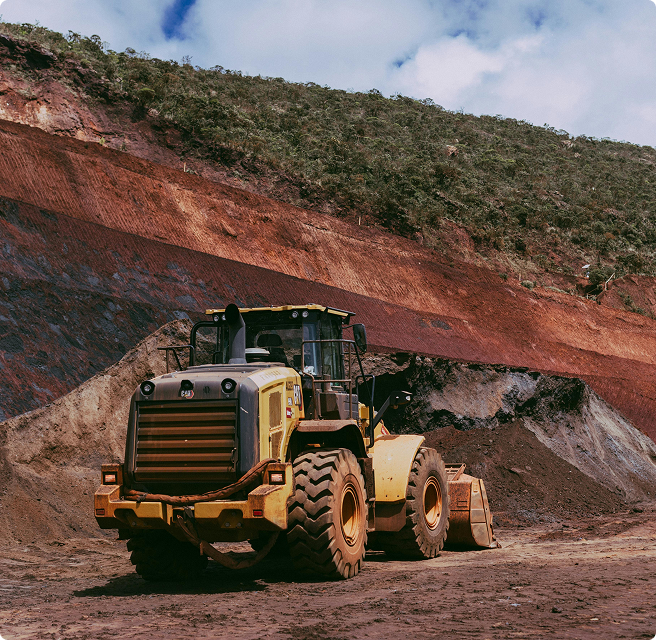
Lithium itself is not scarce. It is mined in regions such as Australia, South America, and parts of Africa. However, the true pinch point lies in refining—transforming raw lithium into battery-grade lithium hydroxide or carbonate, the form required for high-performance electric vehicle batteries.
Today, more than 90 percent of the world’s lithium is refined in East Asia. Even when mined in stable, allied nations, the raw material often travels thousands of miles for processing before being shipped again to European manufacturers. This not only embeds unnecessary emissions into the supply chain but also leaves countries like the UK exposed to price fluctuations, trade disruptions, and delays.

The UK has committed to ending the sale of new petrol and diesel cars by 2035, with a rapid transition to electric vehicles already underway. According to the Faraday Institution, domestic demand for battery-grade lithium could exceed 70,000 tonnes per year by 2030. At present, there is no large-scale refining capacity in the UK to meet this need.
Without the ability to process lithium on home soil, the UK risks missing out on the economic, strategic, and environmental benefits that come from localised, value-added production.
Our facility at Wilton International in Teesside is being developed to address this gap. Once operational, it will be one of the first independent lithium hydroxide refineries in Europe.
Tees Valley Lithium will:
The green transition requires more than pledges. It requires industrial action and infrastructure that reflects the urgency and scale of the challenge. Domestic lithium refining offers the UK an opportunity to lead, not follow, in the race toward sustainable transport and energy systems.
At Tees Valley Lithium, we are proud to be building that foundation. By anchoring critical mineral processing in the UK, we are not just refining lithium—we are refining the future.

Lithium is at the heart of the clean‑energy revolution. It’s what makes electric vehicles, smartphones and grid-scale batteries tick. Tees Valley Lithium (TVL) is seizing this moment by bringing high‑purity, low‑carbon lithium refining to Teesside—and the benefits are set to reverberate across the North East of England.
The Tees Valley economic area is already on a growth trajectory. Between 2020 and 2021, the region saw 4.1 % job growth, with a Strategic Economic Plan targeting 26,000 new jobs and £2.8 billion in GVA by 2026. TVL is set to play a vital role in delivering on those ambitions.
Construction of the refinery - expected to begin around 2025/26 - will bring more than 1,000 skilled jobs, including apprenticeships and contracts across the supply chain. A mid‑2024 report found that since 2019, Tees Valley’s Investment Plan has already supported over 10,600 direct jobs and generated £1.48 billion in GVA. TVL’s development will build on this momentum.
Once operational, likely by 2027, the facility will support around 250 permanent, high-skilled roles, ranging from chemical engineers to environmental specialists, and drive job creation in supporting services such as maintenance, safety and logistics.
TVL is strategically located in one of the UK’s largest chemical parks, benefiting from extensive existing infrastructure and a skilled workforce. The nearby Wilton and Seal Sands industrial zones provide deep expertise in engineering, technical operations and logistics, which creates the perfect environment for growth.
TVL’s presence will further strengthen this ecosystem, offering career opportunities for local apprentices, STEM graduates and mid-career professionals seeking to upskill.
Jobs you can build a career on – Over 1,000 construction roles and around 250 permanent positions in advanced manufacturing, plus numerous indirect and supply chain jobs.
Boosting local GVA – TVL contributes to the region’s economic plan with real impact: increasing wages, enabling innovation and supporting homegrown businesses.
Up-skilling and retention – By partnering with local education providers and tapping into regional talent, TVL will help retain skills in Teesside and attract workers back to the region.
Economic resilience – Diversifying into lithium refining bolsters Teesside’s industrial base and reduces reliance on overseas supply chains for critical minerals.
By locating a cutting-edge lithium refinery in Teesside, TVL isn’t just meeting global demand. It’s creating a hub of innovation, clean growth and long-term opportunity for the North East of England.

At Tees Valley Lithium (TVL), sustainability isn’t an add-on, it’s built into every aspect of our operations. From circular economy principles to transparent supply chains, we’re pioneering a new model for lithium refining in the UK and Europe: one that’s clean, ethical, and built to last.
TVL is designed to minimise waste and maximise reuse, ensuring we operate as part of a broader circular industrial ecosystem. That means reducing environmental impact while strengthening local value chains. Our approach includes:
Reusing wastewater within our operations to cut down on freshwater consumption and eliminate unnecessary discharge
Recovering by-products from lithium refining that can be sold into other industries—turning potential waste into valuable materials
Prioritising closed-loop systems to limit the need for landfill and reduce our overall footprint
Every tonne of lithium refined at TVL will be fully traceable from mine to market. We work exclusively with responsible suppliers and hold ourselves to the highest environmental and ethical standards. This ensures full alignment with upcoming EU battery passport requirements and global ESG reporting expectations.
Our transparency is about accountability, trust, and setting a new benchmark for the lithium industry.
Located at Wilton International within the Teesside Freeport, TVL is strategically positioned in a hub of low-carbon energy and industrial synergy. From harnessing offshore wind via Dogger Bank to aligning with PD Ports’ net-zero agenda, our operations are tightly integrated with the UK’s clean energy ambitions.
This location gives us a unique advantage: a resilient, low-emissions supply chain connected directly to sustainable energy infrastructure.
Our commitment to sustainability goes beyond environmental metrics. We care about people. The construction of our refinery will create over 1,000 jobs, and once operational, we’ll support 250 high-skilled green roles. By investing in the local workforce and engaging with stakeholders across Teesside, we’re helping to drive regional regeneration and support the next generation of clean energy careers.
At TVL, we believe in growing sustainably, and growing together.
Lithium may be a tiny element, but it plays a huge role in the renewable energy transition. It’s the key ingredient in electric vehicle batteries, smartphones, and energy storage systems. But before lithium can power your life, it has to be refined.
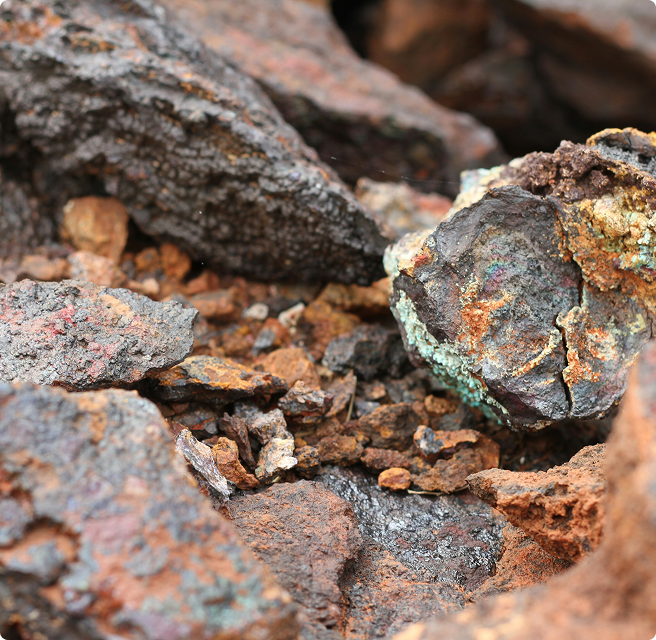
Currently, lithium is extracted from two main sources: spodumene, found in Australia, and brine, located in the salt flats of South America.
But the processes are slightly different. Spodumene is mined, crushed, and then treated through acid-roasting. For brine extraction, salt-rich water is pumped from underground reservoirs into surface evaporation ponds, where, over several months, the water gradually evaporates, causing various salts to crystallize and separate.
At this stage, lithium concentrate generally contains only 5-6% lithium, while battery-grade lithium requires a purity of 99.99%. Today, roughly 75% of the world’s lithium is refined in China.
We have set out to change this and provide European cell manufacturers with a local, resilient supply chain.
The UK has two major competitive advantages; chemical parks and bad weather. Chemical parks, meaning dedicated production sites, and bad weather, meaning strong offshore winds.
Tees Valley Lithium aims to establish the UK’s first low-carbon lithium refinery. It is strategically located in a large chemical park in Teesside in the North East of England, which is connected to one of the world’s largest offshore wind farms, Dogger Bank.
TVL is a refiner not miner, building lithium supply chains in the UK and Europe, reducing reliance on a single dominant market, and supporting the global energy transition.


Tees Valley Lithium Ltd. is a registered company in the United Kingdom. The company is committed to operating in accordance with applicable environmental, regulatory, and industry standards. All partnerships and activities are conducted with a focus on transparency, sustainability, and ethical business practices.

.svg)
.png)